
Real Estate Automation: From SaaS Sprawl to Agent Workflows
How real estate firms can move beyond expensive SaaS sprawl and use AI agent workflows to speed up enquiries, vendor updates, and client follow-up.
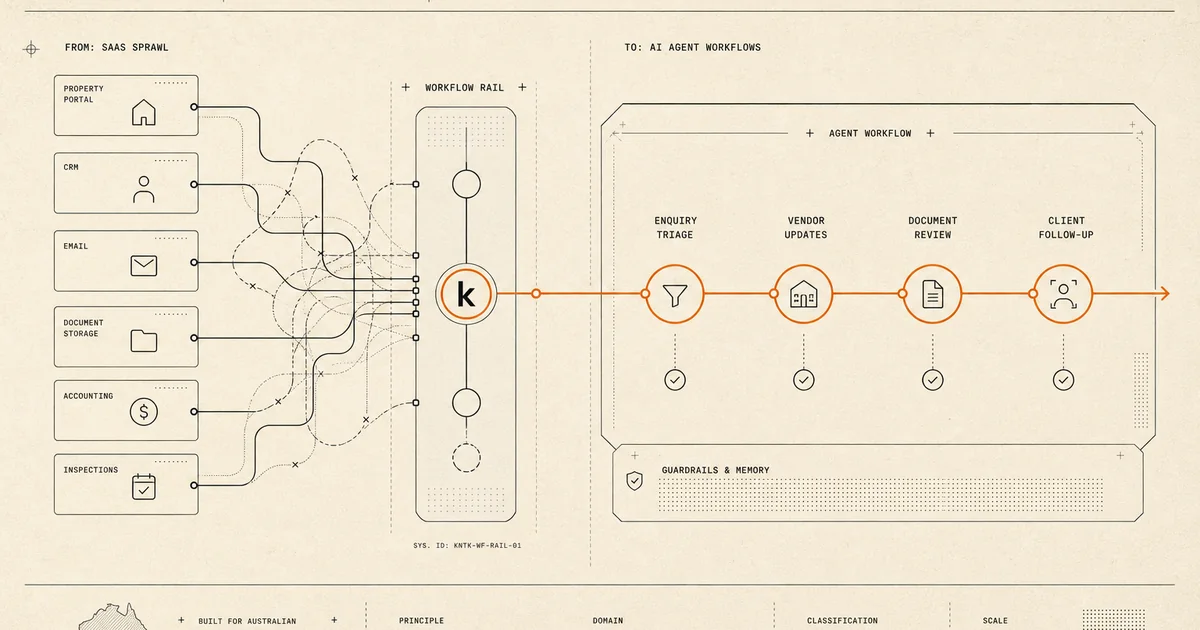
Real estate teams are not short on software. Most firms already have a CRM, a marketing platform, a forms tool, a data room, a document signing product, a listings portal, a finance system, a calendar tool, and a few spreadsheets that everyone pretends are temporary.
The problem is not that the stack is too small. It is that every client interaction still depends on someone stitching the stack together by hand.
An enquiry comes in. Someone checks the CRM. Someone looks for the last email thread. Someone opens a property file, checks the campaign status, finds the vendor notes, copies a few details into a reply, and sets a reminder for the next follow-up. The client sees one response. Inside the firm, five systems were involved.
That is where real estate automation is starting to change. The useful shift is not another dashboard. It is AI agent workflows that can pull context together, prepare the next action, and shorten the time between a client asking for something and the team responding with a useful answer.
Why real estate SaaS sprawl slows client follow-up
Most real estate businesses bought software one pain point at a time.
A CRM fixed lead tracking. A marketing platform fixed campaigns. A proposal tool fixed presentations. A document tool fixed signing. A task board fixed internal follow-up. Then the firm added reporting, call recording, property data, accounting, and inbox rules.
Each tool made sense when it was purchased. Together, they create a different problem: the workflow lives between the tools, not inside them.
That shows up in small delays:
- A buyer enquiry waits while someone checks which properties match the brief.
- A vendor update takes longer because campaign notes live in three places.
- A lease or sale file stalls because one missing document is buried in an inbox.
- A broker or agent spends the first ten minutes of a call reconstructing context.
- A principal cannot see the real pipeline without asking the team to clean the CRM.
None of this feels dramatic on a Monday morning. It just eats the day.
The expensive part is the handoff
Real estate work is full of handoffs: lead to agent, agent to admin, admin to marketing, marketing to vendor, vendor to buyer, buyer to finance, finance to settlement, and so on.
Every handoff needs context. What happened last? What matters to this client? What was promised? What documents are missing? What should happen next?
Traditional automation handles the easy parts. Send the template. Create the task. Move the record to the next stage. That helps, but it does not solve the context problem. The person still has to decide what the template should say, whether the record is complete, and whether the next step is safe.
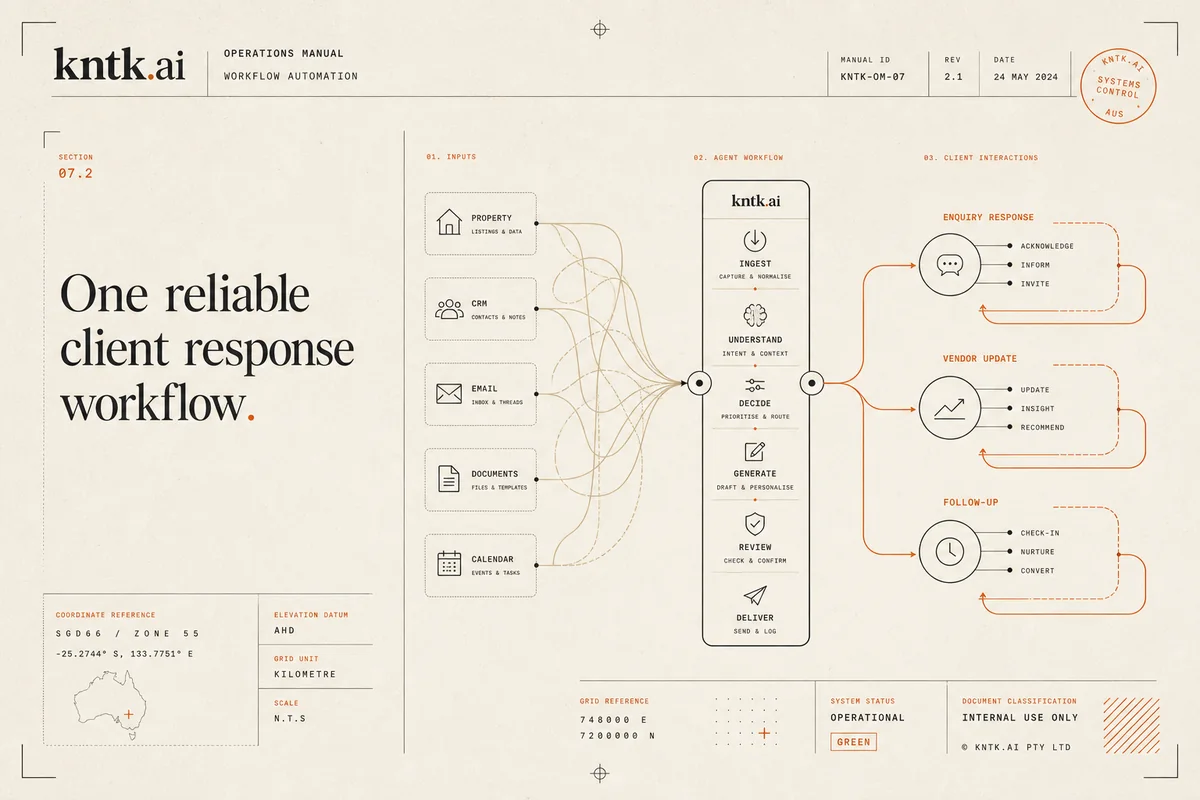
Agent workflows sit in that middle layer. They can read the approved sources, assemble the relevant context, draft the next action, and escalate anything uncertain.
Not magic. Just less copy-paste between systems.
What AI agent workflows look like in practice
A good real estate agent workflow is narrow enough to trust and useful enough to save time.
For example, an inbound enquiry workflow could:
- Read the enquiry and classify the buyer or vendor intent.
- Check CRM history, property interests, inspection notes, and recent conversations.
- Draft a response with the right property context and next step.
- Create or update the CRM record.
- Flag missing information for a human before anything goes out.
A vendor update workflow could:
- Pull campaign activity, enquiry volume, inspection feedback, and open tasks.
- Summarise what changed since the last update.
- Draft a plain-English note for the agent to review.
- Attach the evidence: source links, dates, campaign numbers, and unresolved actions.
A commercial leasing workflow could:
- Match tenant requirements against available properties.
- Check exclusions, budget, location, fitout needs, and timing.
- Prepare a shortlist with reasons, not just search results.
- Draft the follow-up and create the next call task.
The common pattern is the same. The agent does the context assembly and first draft. The human stays in control of judgment, tone, negotiation, and anything legally or commercially sensitive.
Speed matters because client attention decays
Real estate is a timing business. A buyer who receives a useful response in five minutes is in a different state to a buyer who hears back the next day. A vendor who gets a clear update before they ask for it feels managed. A referral partner who gets a fast, accurate answer is more likely to send the next opportunity.
Most firms already know this. They just rely on people to keep up manually.
That works until volume rises, staff change, or the market gets noisy. Then follow-up quality becomes uneven. The best operators still do great work, but the system depends on memory, discipline, and inbox stamina.
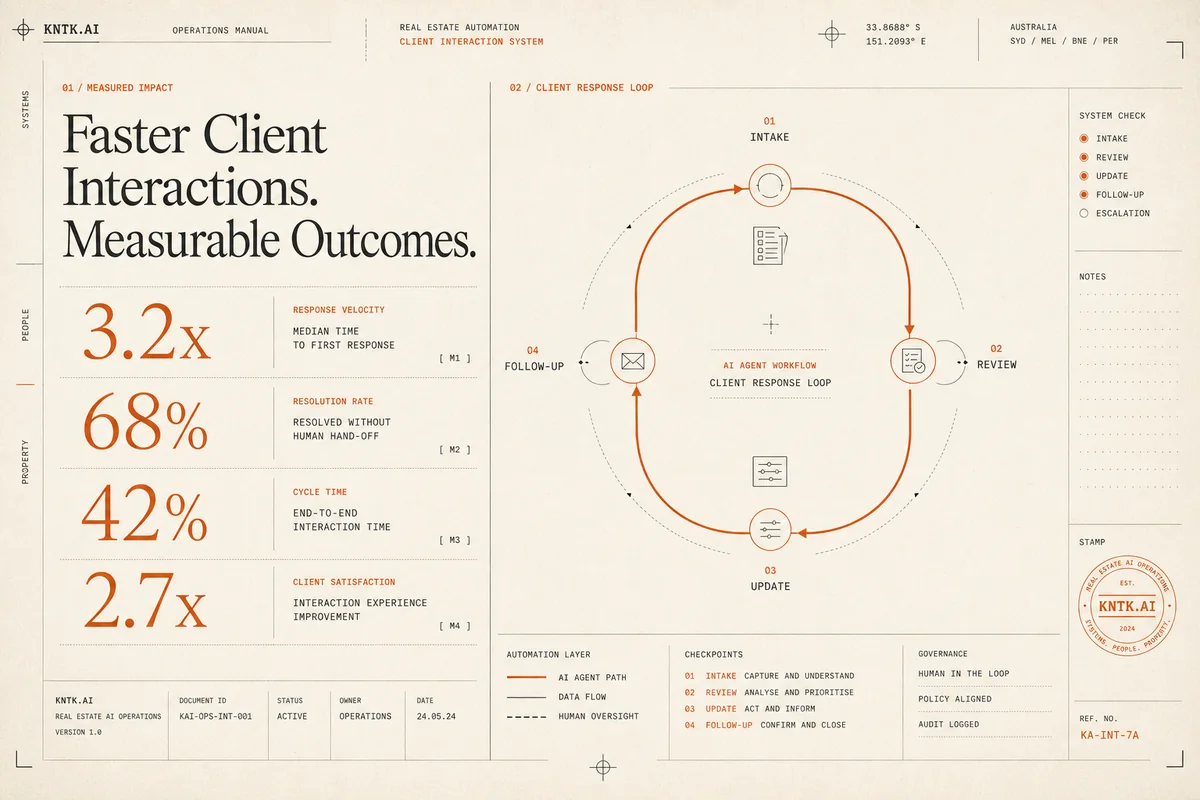
Agent workflows make the default response faster. They do not replace the relationship. They give the relationship more timely context.
The future of real estate automation is workflow-first
The next version of the real estate technology stack will still include SaaS. CRMs, listing systems, document tools, and finance platforms are not disappearing.
What changes is the layer above them.
Instead of asking staff to jump between systems, firms will define the workflows that matter most:
- New enquiry to qualified follow-up.
- Appraisal request to prepared agent briefing.
- Vendor campaign update to reviewed client message.
- Inspection feedback to next-best action.
- Contract or lease milestone to document checklist.
- Referral partner update to logged pipeline activity.
Then agents will help run those workflows across the existing tools, with permissions, review steps, and audit trails built in. That is the practical version of workflow automation in real estate: fewer manual handoffs before the client gets a useful answer.
That is a different buying decision. The question stops being "which SaaS tool do we add next?" and becomes "which client interaction should we make faster and more reliable?"
Where to start
Start with the workflow closest to revenue or client trust.
For many real estate firms, that is inbound enquiry response, vendor updates, appraisal preparation, or post-inspection follow-up. Pick one. Map the systems involved. Define what a good human response looks like. Decide what the agent can read, what it can draft, what it can update, and what must stay under human review.
The first version should not automate everything. It should remove the slowest context gathering and leave the important judgment with the team.
That is usually enough to feel the difference. Faster replies. Cleaner records. Fewer dropped follow-ups. Less time spent rebuilding the story before every client interaction.
The firms that win with automation will not be the ones with the biggest SaaS stack. They will be the ones that turn their best operating habits into workflows their team can run every day.
Want to map the first agent workflow for your real estate team? Book a project call.
Next
Turn the idea into a scoped workflow.
Bring the process, data sources, and risk points. We will map the smallest useful production path before implementation starts.
Book a project callBrowse
Find the matching implementation page.
Specialist pages connect the strategy to delivery models for agents, document processing, customer service AI, RAG, and process automation.
View specialists →Related
Continue the thread
3 min read
The Rise of AI Agents in Australian Business
How Australian businesses are using AI agents for support, finance, research, and back-office workflows without giving up control.
3 min read
Automating Document Processing with AI
A practical guide to intelligent document processing for invoices, contracts, forms, and operational paperwork.